I love the intersection of classical forms and popular material, whether it’s the use of ABA form in a rock song or Beethoven’s use of opera hits for themes to vary. Here are some fugues composed on modern pop material which I especially enjoy.
Frank Loesser’s opening number for “Guys and Dolls” starts the show in a quirky and energetic way, giving the same music to three different gamblers praising the virtues of (and betting on) three different horses. The use of fugue here works well and keeps up the momentum of “Runyonland” (the prelude).
Giovanni Dettori’s fugue has a good YouTube presence, with covers on organ and piano. Here’s the sheet music:
http://www.giovannidettori.com/LadyGagaFugue.pdf Dettori states that this is “not strict counterpoint;” I find it interesting that the answer doesn’t start until the countersubject has begun. He uses the fugal form fairly fluently, making a good argument for the validity of pop material in classical garb.
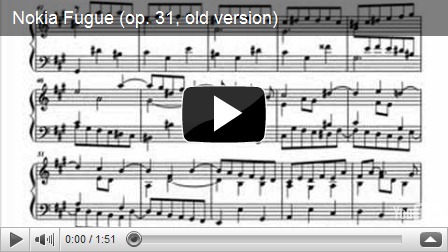
Fugue on that ubiquitous Nokia ringtone
Nokia phones are everywhere, and everywhere they go the subject of this fugue goes with them.
http://www.audiomuse.ca/doc/pdf/lo_nokia_fugue_v2a.pdf Vincent Lo, the composer, writes perky counterpoint around this tune (and presents a very clean typeset score, too).
Fugato Humoresque on the theme of “Dixie”
Now for some professional music. Mana Zucca was a famous soloist and composer around the turn of the century. Look her up online! Shura Cherkassky is another great pianist from later this century and does a fantastic job with this quintessentially American piece. A free recording can be downloaded here:
http://www.lykhin.com/eng/classicdb/composers/mana-zucca/1398
.............................................................................................................................................................
Finally, an encore. Though not a fugue, the “Dance of the Hours” from Amilcare Ponchielli’s opera
La Gioconda became a popular hit in its day. You may recognize it as another famous pop song: listen to the original (the melody starts at 2:00) and then scroll down for the reveal.
“Dance of the Hours” from La Gioconda
----------------------------------------------------------------------------------------------------------------
one of my childhood favorite songs!